Feed
-
Parsons School of Design
(MS Strategic Design & Management – Thesis) -
UX Designer, Product Researcher, Business Strategist
-
User Research, Prototyping, Wireframing, User Testing
-
Food & Beverage, Management
-
September 2023 - May 2024
-
Figma
Typeform (surveys)
Wix (temp. webpages)
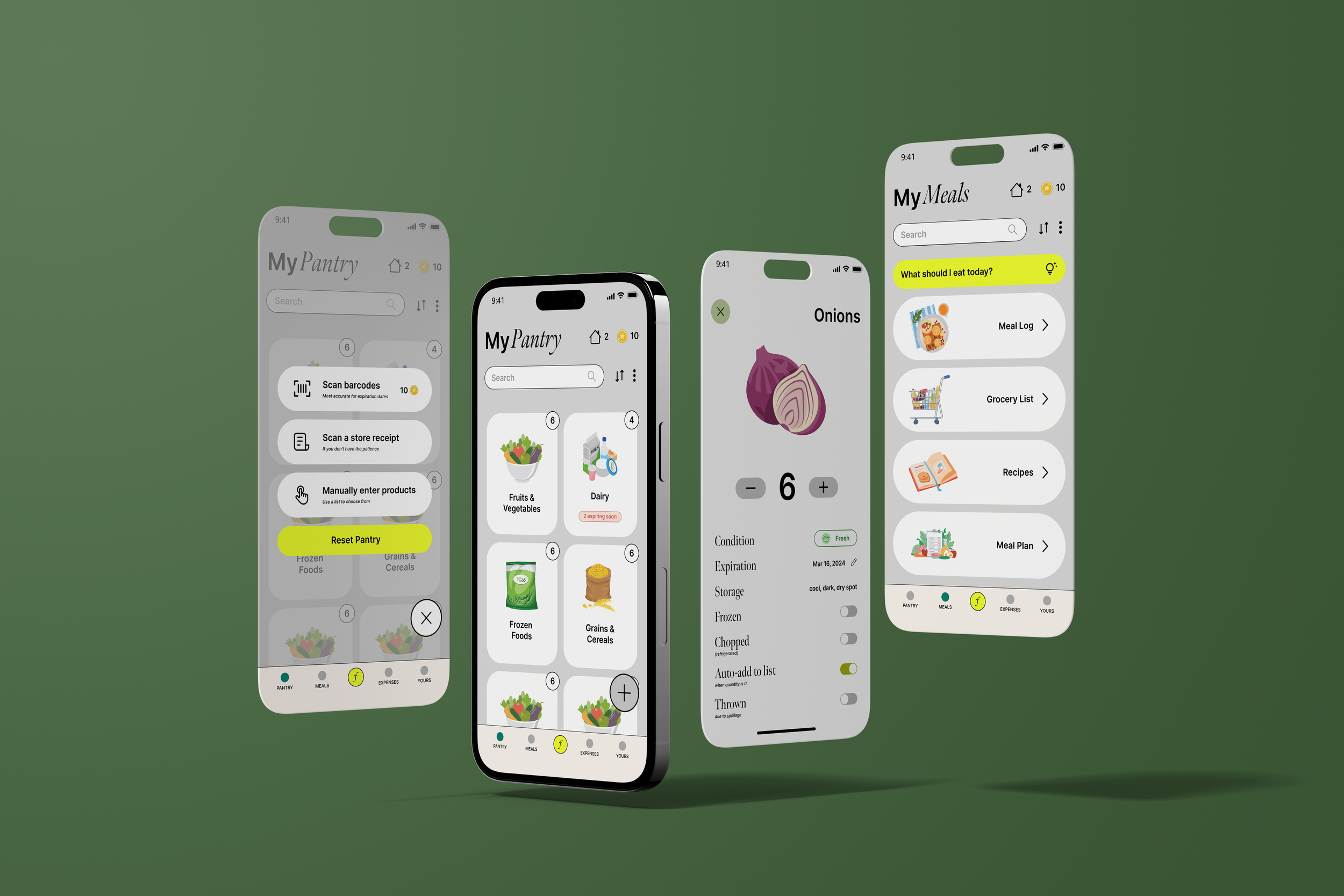
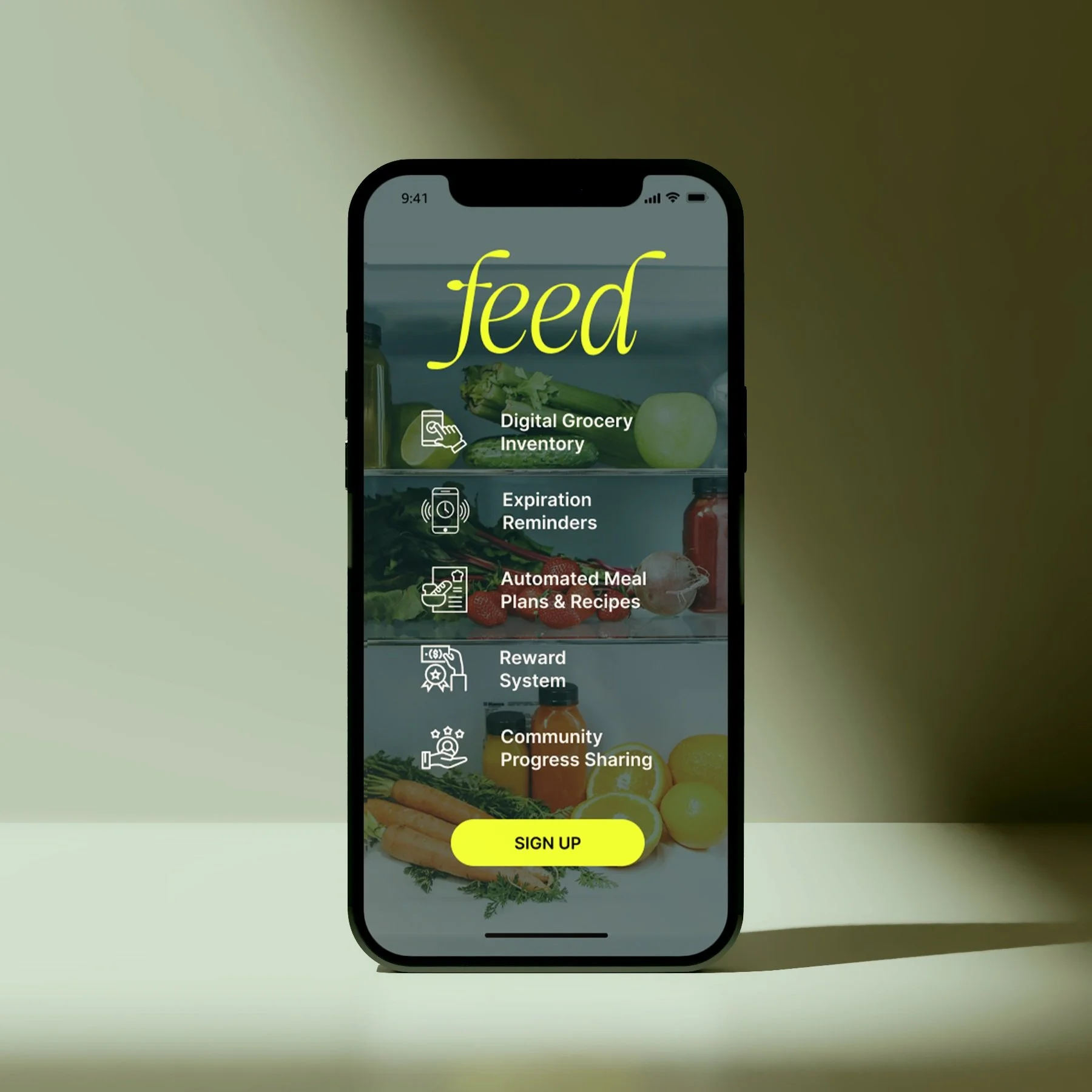
A pioneering digital platform transforming young adults' food waste habits, helping them save money while tackling waste and hunger in their communities.
The Problem
40%
39%
Co2
18-34
produced by food waste is right behind US & China as countries
year olds have been found to waste the most food
2B
$1,866
no. of people we’d be able to feed if we stopped wasting all that food – UNFAO
amount the average US household loses on wasted food per year
of the food waste comes from households
of annual food production in the US is discarded
What are the current issues that lead to food waste behaviors and how does feed aim to solve them?


Lack of convenient
meal planning
AI assisted meal
planning & recipes

Impulsive grocery shopping
Planned grocery lists

Lack of social
influence and norms
Social encouragement
+ community

No immediate consequences
Reward system

Lack of knowledge/resources
Extensive
resources & tips

Perceived abundance
Awareness reminders

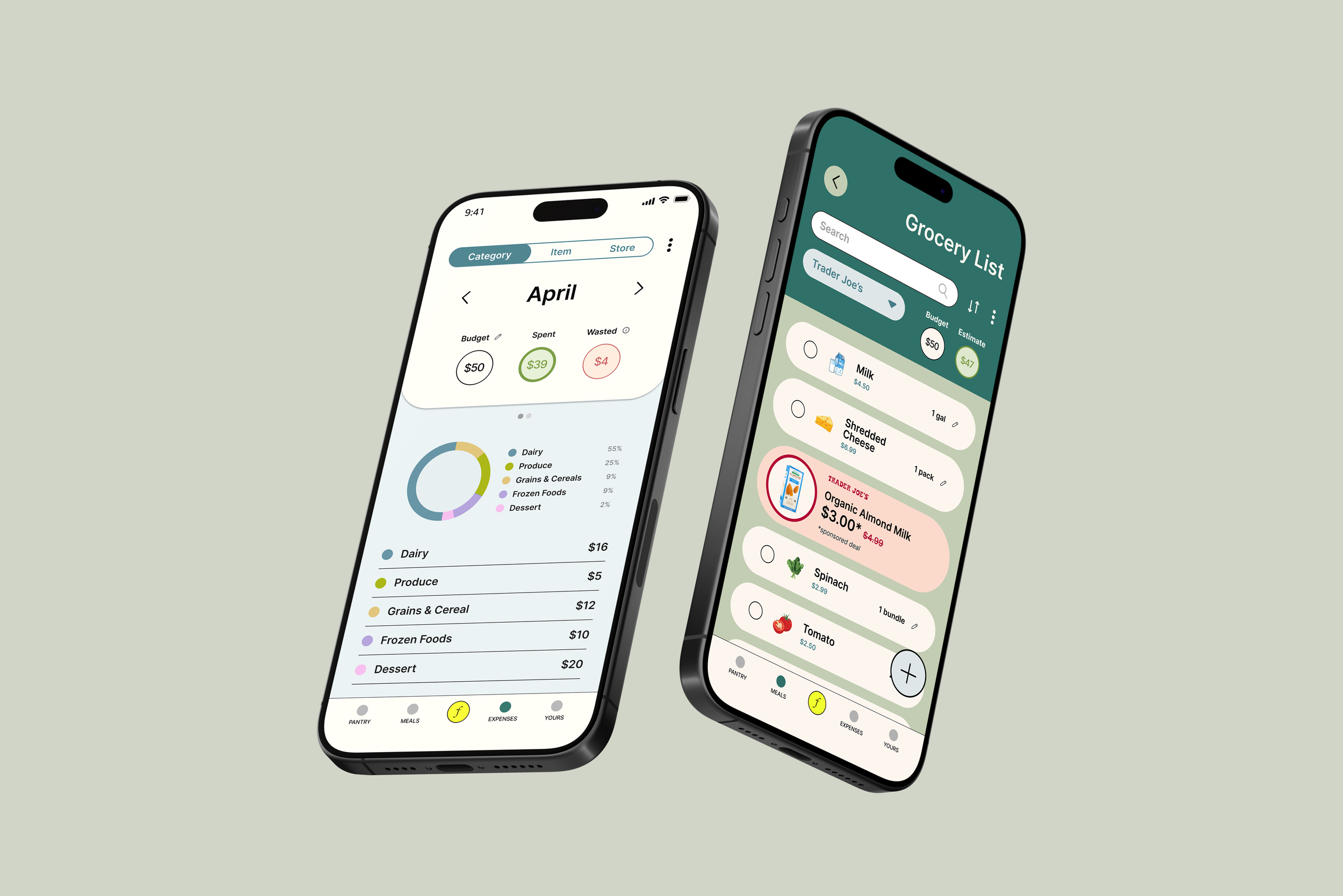
Easy digital inventory management
No inventory management

Expenditure tracking
& budgeting
Unaware of financial loss
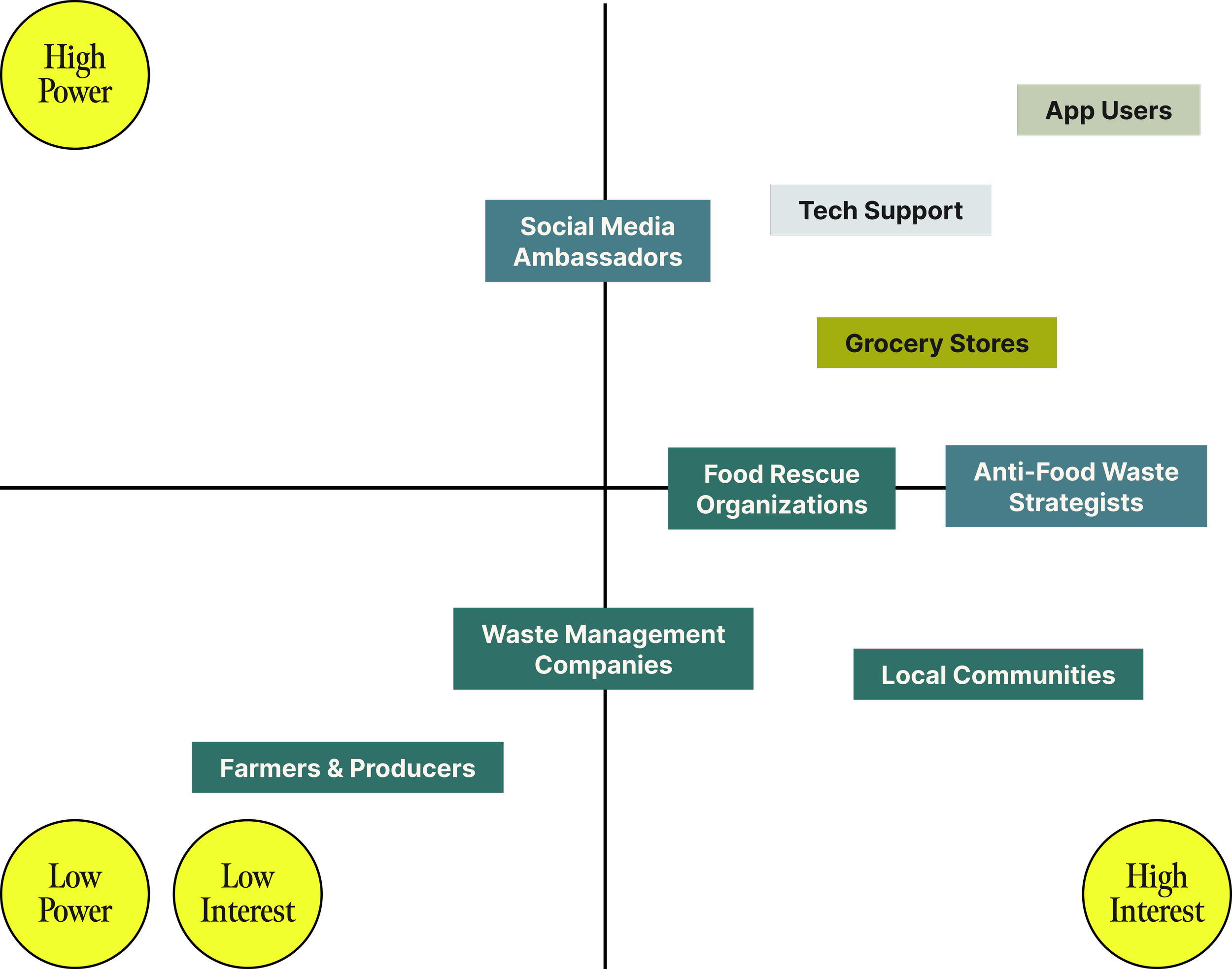
Stakeholder Map
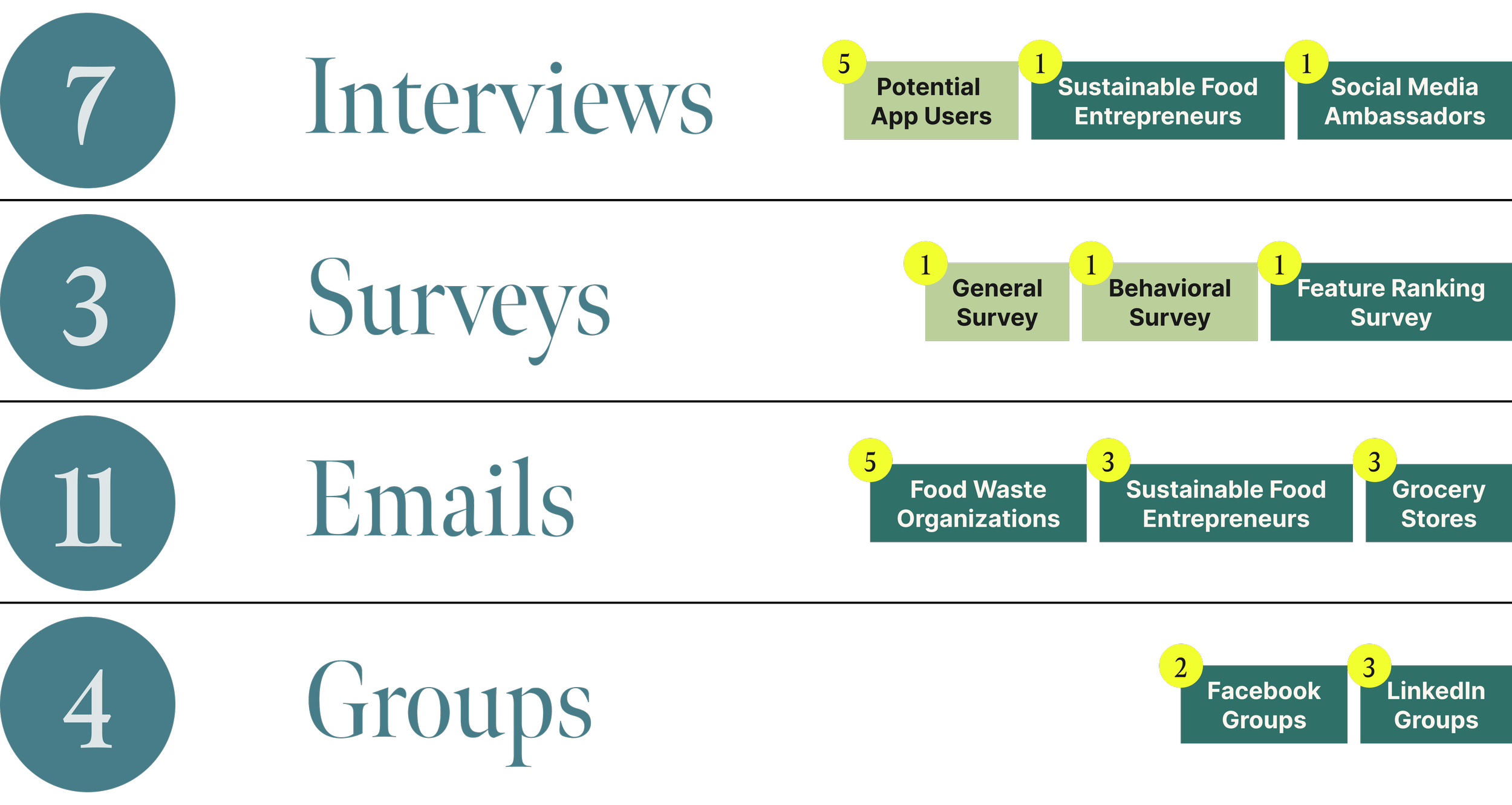
Research Plan
Key Learnings
Expiration Reminders
most people struggle to keep up with expiration dates of their groceries
Community Interaction
will make people more accountable, having a leaderboard can gamify the platform – Ex: Personal Groups
Low Effort Inventory
AI receipt scanners that enable users to update their inventory easily
Meal Planner
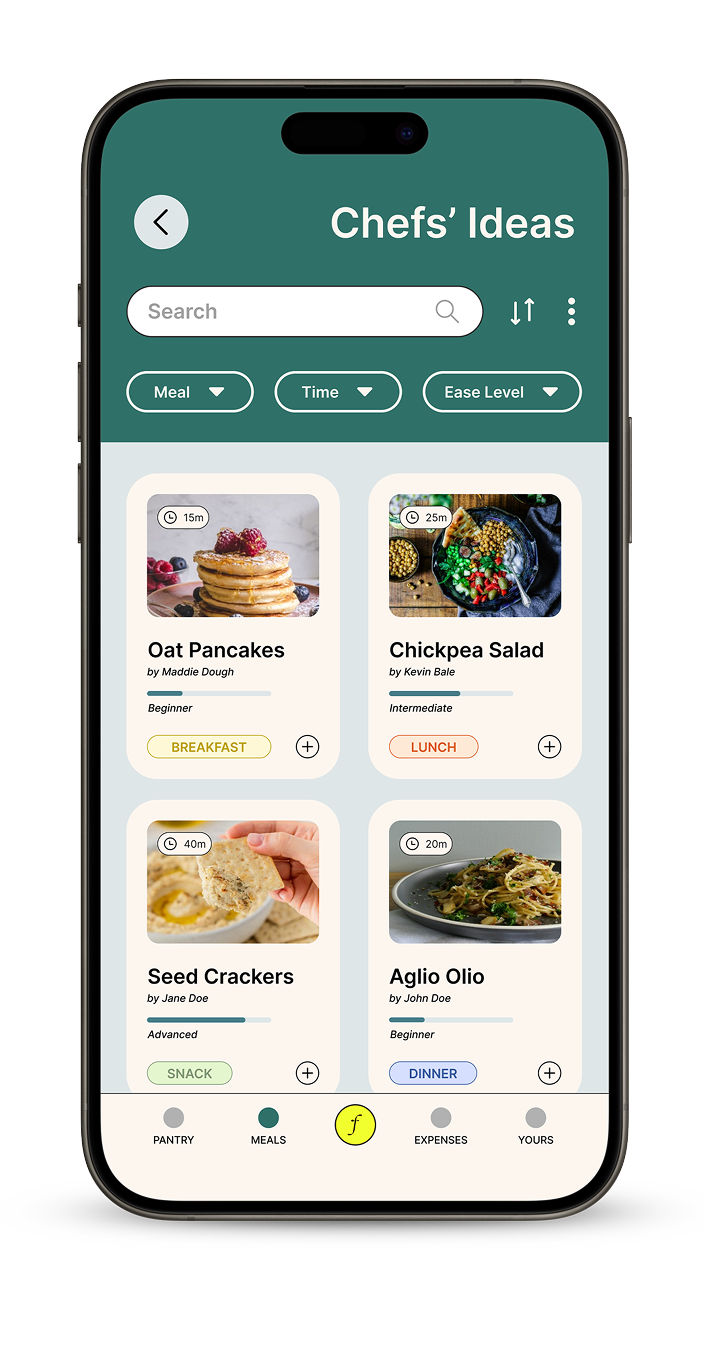
AI-generated meal ideas based on ingredients in one’s pantry
Rewards/
Points
Anti-food waste activities while using the app (Ex: purchasing ingredients close to expiry)
Storage Tips
how to reuse ingredients for multiple recipes, store produce correctly, etc.
Market Sizing
Market Sizing
Total Addressable Market
293M
87.2% of the US population –grocery shops for their household
Serviceable Available Market
94M
US young population that shops at large supermarkets like Whole Foods & Trader Joe’s
Serviceable Obtainable Market
1.9M
20-34 year olds in NYC, where grocery shopping frequency is high
Competitor Analysis
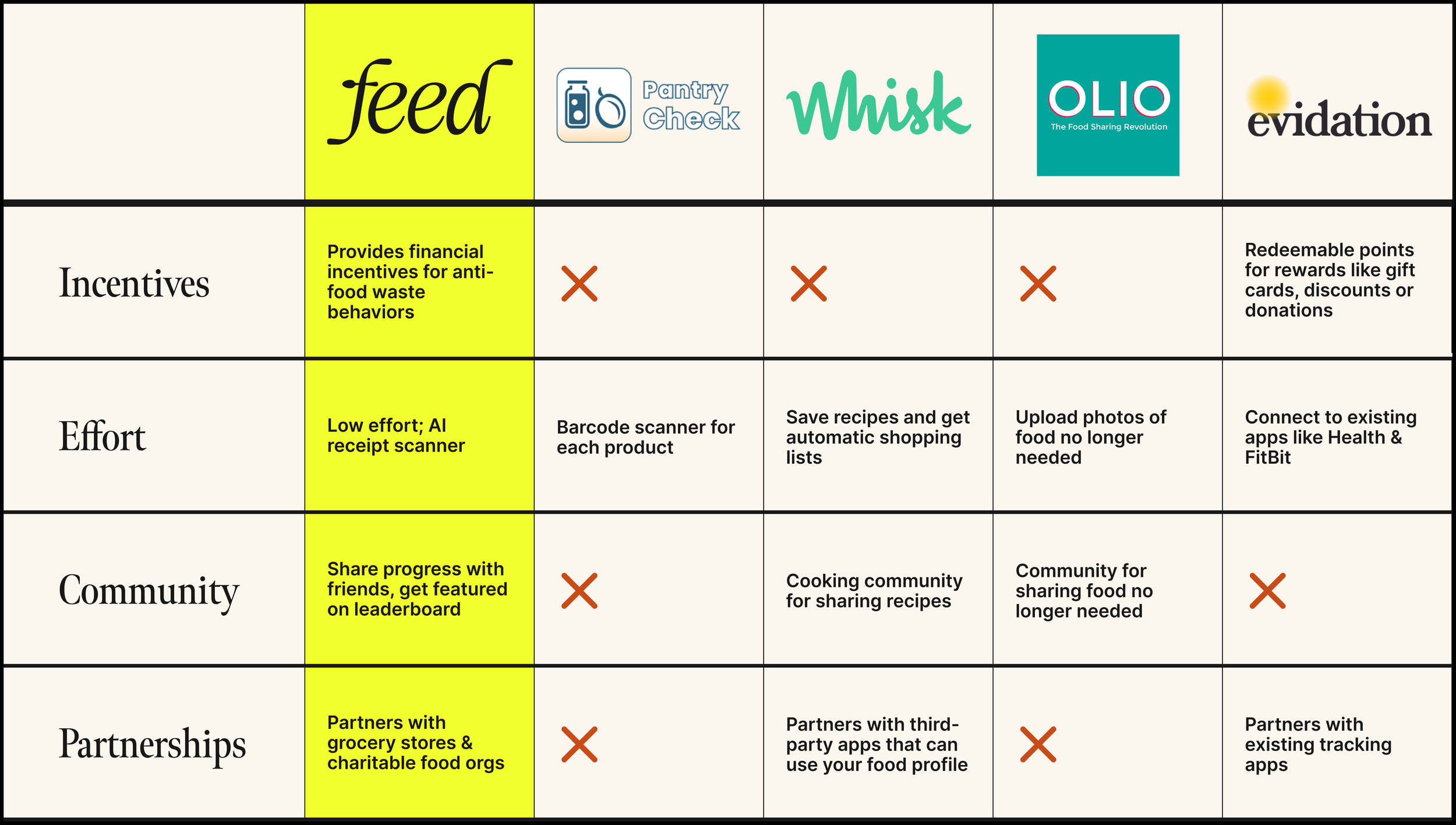
Differentiating Factors
Behavior-Driven Food Management
Community & Accountability Loops
Smart Planning & Inventory Tools
Sustainability Through Everyday Actions

Testing Assumptions
brand voice
UNIQUE VISITORS
97
TOTAL REACH
6,978
4
UNIQUE SUBSCRIBERS
FACEBOOK ADS
$20
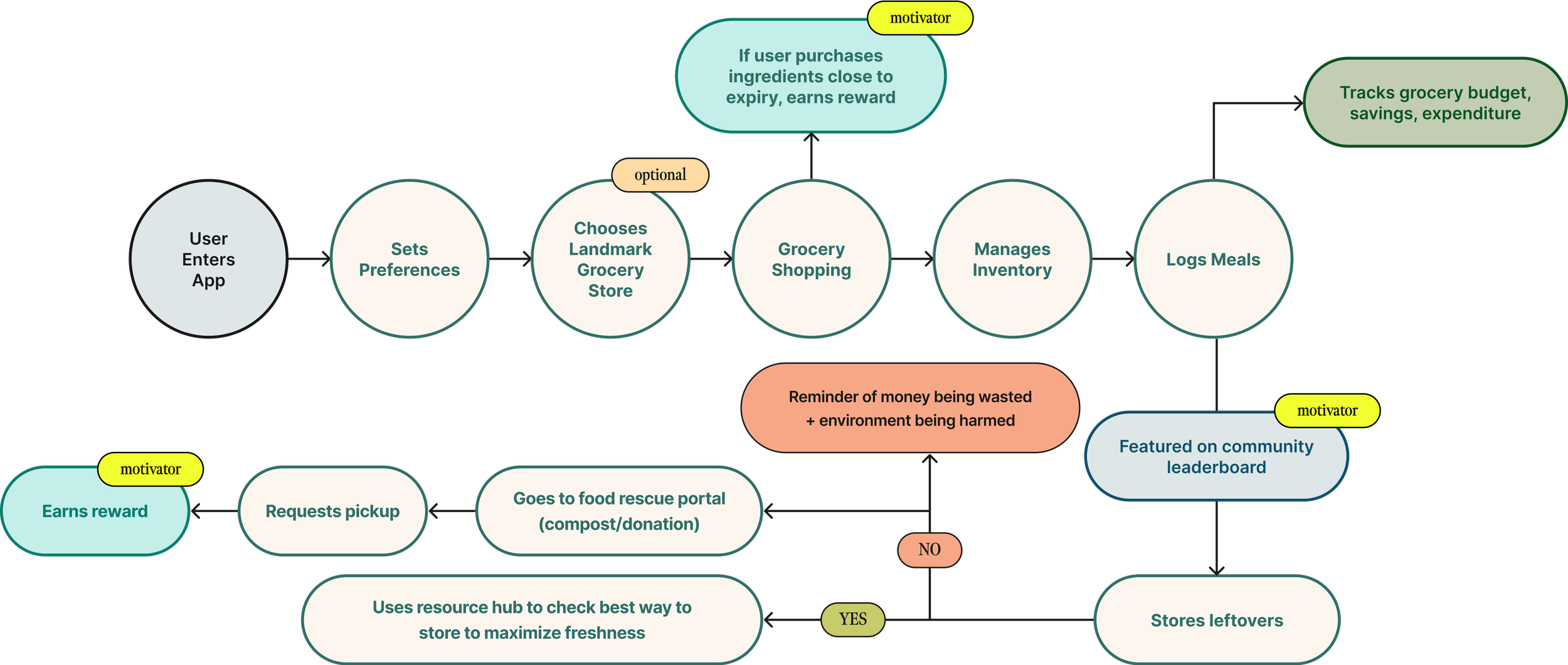
User Flow
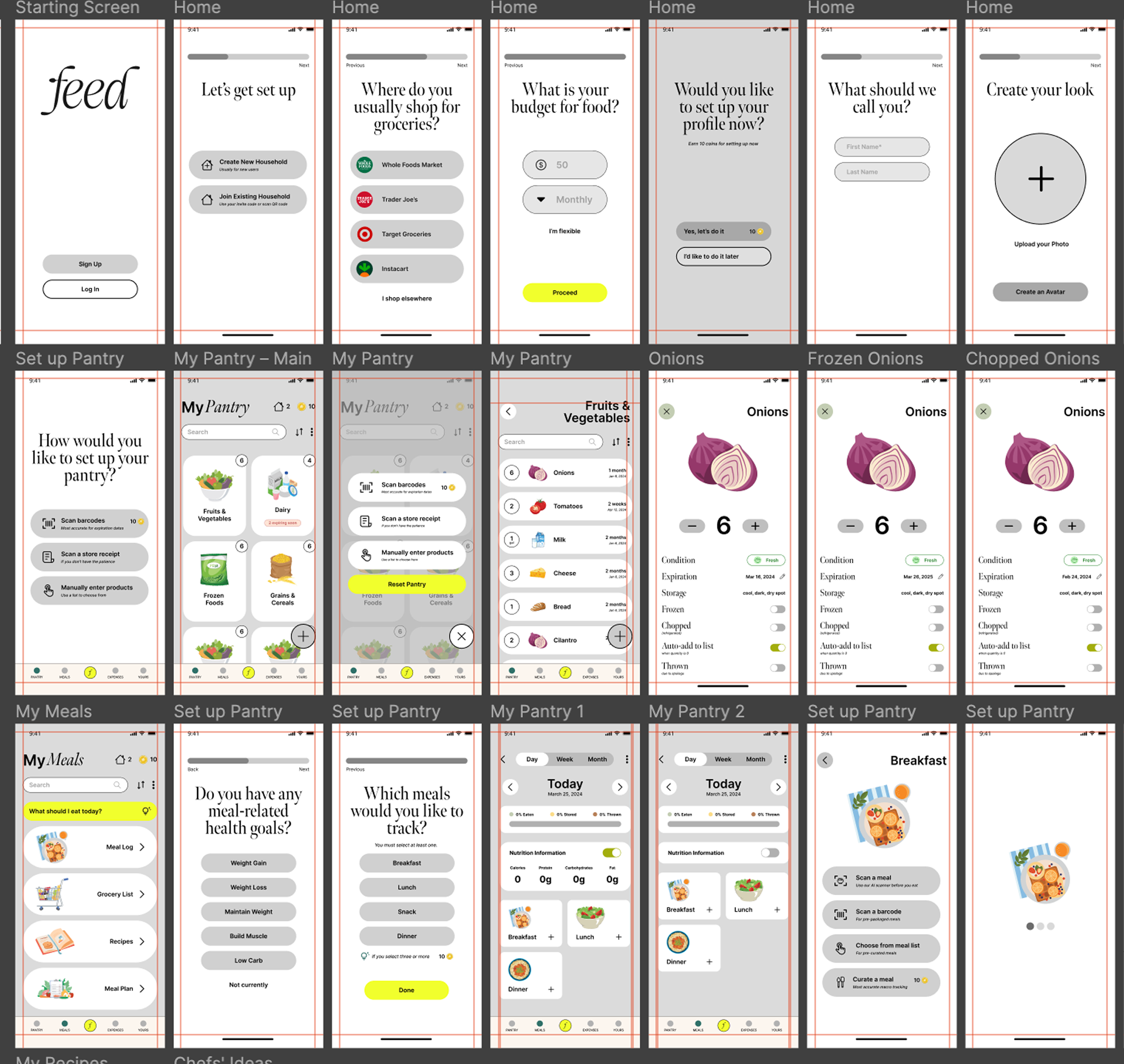
Prototype
(Mid-Fidelity)
Solution Objectives
To design a system that helps users reduce everyday food waste through awareness and action
To simplify meal planning and grocery decisions
To make food consumption more intentional and less impulsive
To introduce accountability through community and shared behavior
To create small, consistent interventions that influence long-term habits
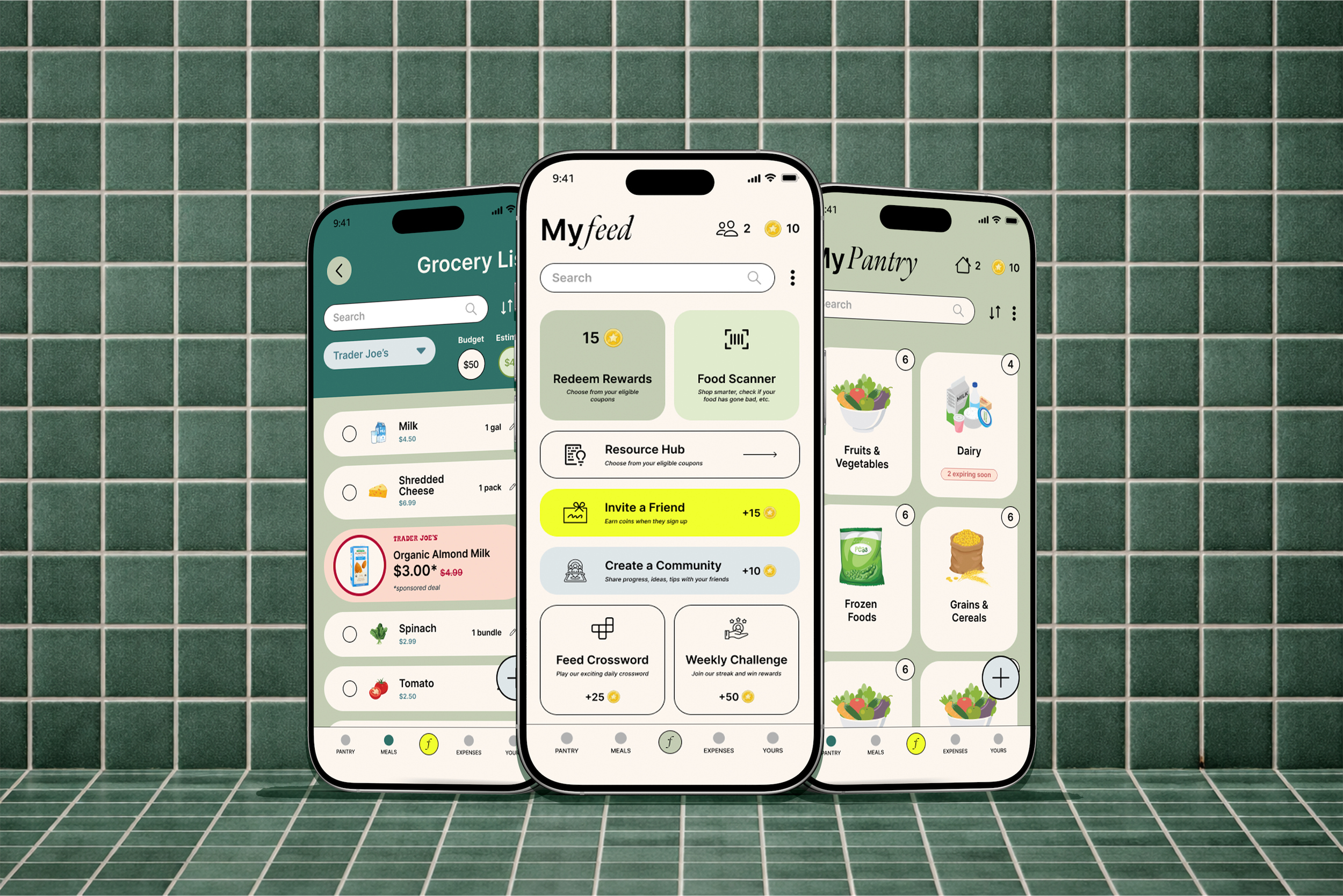
Visual Styleguide
VIRIDIAN
MATCHA
BABY BLUE
TEAL
OLIVE
ACCENT


Final Prototype
Business Model Patterns
Affiliation
Supporting recipe creators by placing links to their blogs / websites
Commission Fees
Low Cost
Convenient
Scalable
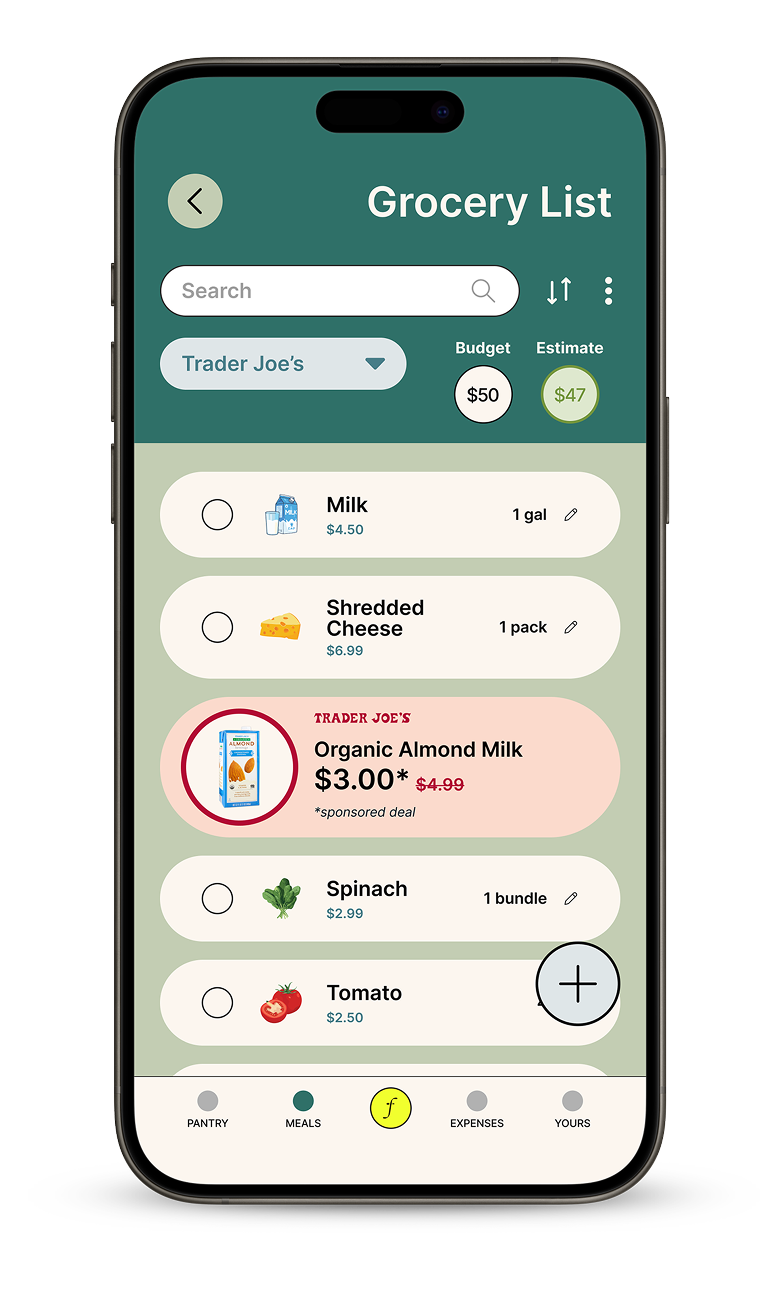
Advertisement
Using customer data to efficiently present personalized ads by selected partners
Targeted Audience Reach
Predictability
Stability
Data-Powered Insights
Takeaways
-
Reducing food waste is not just a usability problem but a behavioral one. Small, well-timed interventions can influence everyday decisions more effectively than adding more features.
-
Users often underestimate how much food they waste. Surfacing patterns through simple, digestible insights helps build awareness and drives more intentional consumption.
-
Smart recommendations can simplify planning, but users need to feel in control. The system works best when automation supports decisions rather than replacing them.
-
The impact of the product comes from how planning, tracking, and community features work together. Focusing on the system as a whole creates a more cohesive and effective experience.

Next Steps
-
Conduct broader testing across diverse households to better understand real consumption patterns and refine behavioral interventions.
-
Enhance recommendation systems to provide more context-aware suggestions based on user habits, inventory, and consumption trends.
-
Adapt the experience for different regions and user needs, ensuring the system is intuitive across languages, cultures, and levels of digital literacy.
-
Develop more robust analytics to help users understand long-term patterns and measure the impact of their behavioral changes over time.